
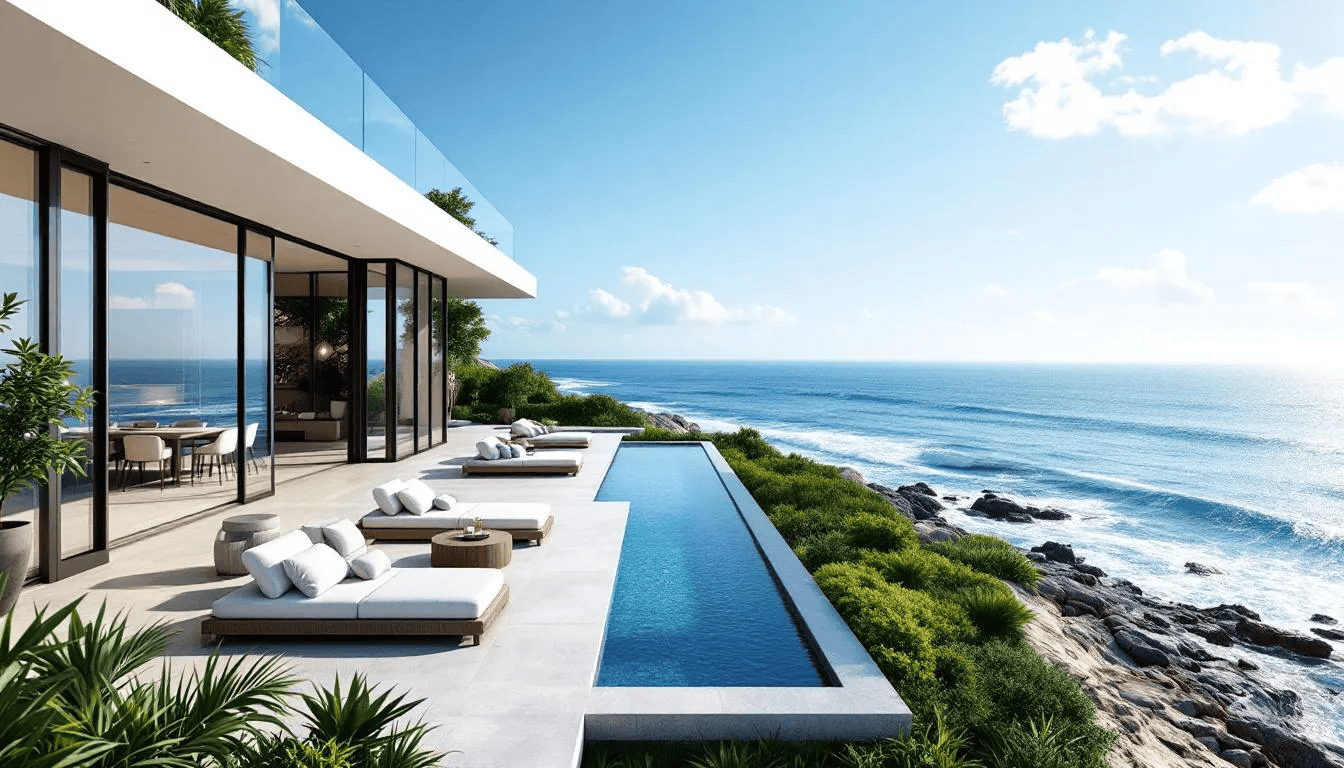
The New Coastal Minimalism: Building Quiet Luxury Estates in South Florida
Why the next generation of waterfront homes is moving away from excess—and toward refined, intentional living designed for longevity, performance, and timeless sophistication.
Introduction
Luxury residential design in South Florida is entering a quieter, more disciplined era.
For years, waterfront estates competed through scale alone—larger footprints, more dramatic features, and increasingly elaborate architectural statements. While those homes delivered spectacle, many lacked something more enduring: restraint. Today’s discerning homeowners are shifting away from overt excess in favor of residences that feel calm, intentional, and deeply connected to their environment.
This evolution has given rise to what architects and high-end builders are calling coastal minimalism.
The concept is not about stark or cold interiors. It is about precision. Every material, proportion, and detail is selected with purpose. Spaces feel expansive without being overwhelming. Finishes are refined rather than decorative. The architecture allows natural light, water views, and craftsmanship to become the focal points.
In South Florida—particularly across Palm Beach County, Miami-Dade, Broward County, and Martin County—this design philosophy is reshaping luxury residential construction. Waterfront homes are becoming more sophisticated, more resilient, and more livable.
At Watlee Construction, coastal minimalism represents far more than a visual trend. It requires exceptional execution beneath the surface. Clean lines and open spaces leave no room for construction imperfections. Structural engineering, material selection, climate durability, and tailored design must all work together seamlessly.
Because true luxury is not defined by how much a home contains.
It is defined by how effortlessly every element works together.
Market / Industry Insight
The luxury market across South Florida is evolving rapidly, particularly among high-net-worth homeowners building custom waterfront estates.
Buyers today are significantly more design-aware than they were even five years ago. Many travel internationally, study architecture, and understand the difference between trend-driven design and timeless construction. They are no longer interested in homes that feel overly ornamental or visually heavy. Instead, they want residences that feel composed, functional, and enduring.
This shift is strongly influencing architectural direction throughout coastal communities like Palm Beach, Delray Beach, Fort Lauderdale, Boca Raton, Jupiter Island, and Miami Beach.
Several factors are driving this movement.
First, waterfront lots themselves have become increasingly valuable. Homeowners want architecture that maximizes views, natural light, and spatial openness without visually competing with the surrounding environment. The ocean, Intracoastal, or skyline should remain the focal point—not unnecessary decorative elements.
Second, there is growing appreciation for longevity in both aesthetics and construction quality. Minimalist architecture demands higher standards because flaws cannot hide behind excessive detailing. Precision becomes essential.
Finally, climate awareness is reshaping luxury priorities. Sophisticated homeowners want residences that perform exceptionally in South Florida’s demanding coastal environment while maintaining a calm, modern appearance. This means integrating resilience into the architecture without disrupting its visual simplicity.
As a result, the new benchmark for luxury construction is no longer extravagance alone.
It is disciplined sophistication supported by superior execution.
Design & Build Perspective
Minimalist coastal architecture may appear effortless, but achieving that level of refinement requires extraordinary coordination between design, engineering, and construction.
The cleaner the architecture, the more important every detail becomes.
Structural Precision Behind Open Spaces
One of the defining characteristics of coastal minimalism is openness. Large uninterrupted living spaces, floating staircases, oversized glass walls, and extended cantilevers create an atmosphere of calm fluidity.
But structurally, these features are highly complex.
In South Florida’s HVHZ (High-Velocity Hurricane Zone), expansive openings and minimal structural interruption require advanced engineering solutions capable of managing substantial wind loads and lateral forces. Steel reinforcement systems, concealed structural framing, and carefully calculated load paths allow the architecture to maintain its clean visual language without sacrificing performance.
What appears simple on the surface is often the result of significant engineering beneath it.
Large pocketing glass systems, for example, require precise integration between structural support, drainage management, waterproofing, and mechanical operation. When executed properly, the transition between interior and exterior spaces feels almost invisible.
This level of craftsmanship separates true luxury construction from standard residential building.
Material Selection for Coastal Longevity
Minimalist homes place enormous emphasis on material quality because there are fewer visual distractions. Every surface is exposed. Every texture matters.
In coastal South Florida, materials must also withstand intense UV exposure, humidity, salt air, and temperature fluctuations.
Natural stone remains one of the most important components of refined coastal design, but not all stone performs equally in waterfront environments. Dense limestone, porcelain slabs, and carefully specified quartzite surfaces offer durability while maintaining a timeless aesthetic.
Wood applications are equally strategic. Warm wood tones soften minimalist architecture and introduce balance, but they must be engineered for stability in humid conditions. High-end custom cabinetry and millwork require controlled fabrication processes and climate-conscious installation methods to ensure long-term consistency.
Marine-grade 316 stainless steel has also become essential in luxury waterfront construction. From concealed fasteners to custom railings and door hardware, corrosion resistance is critical to maintaining both functionality and appearance over time.
The goal is not simply visual beauty on completion day.
It is ensuring the home ages gracefully for decades.
Light as an Architectural Material
One of the most powerful aspects of coastal minimalism is its relationship with natural light.
Rather than relying heavily on decorative elements, these homes use light itself to shape the experience of the space. Floor-to-ceiling glass, clerestory windows, floating rooflines, and carefully positioned openings create changing patterns of illumination throughout the day.
In South Florida, however, managing sunlight requires balance.
Without proper planning, excessive heat gain and glare can compromise comfort and efficiency. High-performance glazing systems, deep overhangs, recessed openings, and automated shading solutions allow homes to remain bright and open while maintaining thermal control.
This creates interiors that feel soft, calm, and naturally connected to the surrounding environment.
The architecture never fights the climate.
It works with it.
Tailored Design Over Excess
One of the defining characteristics of modern luxury is customization.
Affluent homeowners increasingly want homes designed specifically around how they live rather than spaces filled with unnecessary square footage. This has elevated the importance of tailored design and intentional planning.
Primary suites now function as private retreats with integrated wellness spaces, spa-inspired bathrooms, and carefully curated lighting. Kitchens prioritize functionality and flow through concealed storage systems, integrated appliances, and expansive custom cabinetry that maintains visual simplicity.
Outdoor living areas have also evolved dramatically. Covered terraces, resort-style pools, outdoor kitchens, and waterfront lounges are designed as true extensions of the home rather than secondary amenities.
Every space must feel purposeful.
Minimalism, when executed correctly, is not about reducing luxury—it is about refining it.
Lifestyle & Client Experience
The appeal of coastal minimalism extends far beyond aesthetics. It fundamentally changes how a home feels to live in.
These residences create a sense of calm that is increasingly rare in modern life.
Open layouts improve circulation and natural movement throughout the home. Reduced visual clutter creates mental clarity. Natural materials and controlled lighting produce warmth without excess ornamentation.
The experience becomes sensory rather than decorative.
Morning light reflects softly across stone flooring. Ocean breezes move naturally through covered outdoor spaces. Sliding glass walls disappear entirely, allowing the boundary between indoors and outdoors to dissolve.
This connection to the environment is particularly powerful in South Florida, where year-round outdoor living is central to the luxury lifestyle.
At the same time, advanced climate control systems, acoustic insulation, and high-performance building envelopes maintain comfort and privacy regardless of exterior conditions.
The result is a home that feels simultaneously expansive and intimate.
Clients are increasingly prioritizing this emotional experience over dramatic visual statements. They want homes that support relaxation, entertaining, family living, and wellness without feeling performative.
This shift has also influenced interior design preferences. Neutral palettes, refined finishes, and layered textures create interiors that feel timeless rather than trend-driven. Furniture and artwork are curated with restraint, allowing architecture and craftsmanship to remain central.
True sophistication is often quiet.
And in today’s luxury market, that quietness has become one of the most desirable qualities a home can possess.
Investment & Long-Term Value
Timeless architecture has always outperformed trend-driven design over the long term.
That principle is especially important in South Florida’s luxury residential market, where waterfront properties represent significant generational investments.
Homes designed around coastal minimalism tend to retain value exceptionally well because they prioritize enduring architectural principles rather than temporary stylistic trends. Clean lines, natural materials, open layouts, and strong indoor-outdoor relationships remain relevant regardless of shifting market preferences.
Construction quality also plays a major role.
Minimalist homes demand a higher level of execution because imperfections are immediately visible. Superior craftsmanship, precision detailing, and refined finishes directly influence long-term performance and resale value.
Durability is equally important.
Advanced glazing systems, elevated foundations, moisture-resistant materials, and corrosion-resistant hardware reduce maintenance exposure while preserving the integrity of the home over time. Buyers increasingly understand the value of these construction decisions, particularly in coastal environments exposed to hurricanes, humidity, and salt air.
Energy efficiency has also become a growing consideration among luxury homeowners. High-performance envelopes, intelligent shading systems, and climate-responsive design strategies improve operational efficiency without compromising aesthetics.
This combination of timeless architecture and resilient construction creates a residence that performs exceptionally both as a lifestyle asset and as an investment.
In today’s market, that balance is becoming increasingly valuable.
Conclusion
The future of luxury residential construction in South Florida is not about building larger or louder homes.
It is about building smarter, calmer, and more intentionally.
Coastal minimalism represents a refined approach to luxury living—one where architecture, craftsmanship, and climate-conscious engineering operate in complete harmony. Every line is purposeful. Every material is selected for both beauty and performance. Every space is designed to enhance how the home feels day after day.
At Watlee Construction, this philosophy guides how we approach modern custom estates throughout Palm Beach, Broward, Martin County, and Miami-Dade. We believe exceptional homes should not only impress visually—they should endure structurally, function effortlessly, and remain timeless for generations.
Because the most sophisticated luxury is never forced.
It is quietly, confidently built into every detail.