
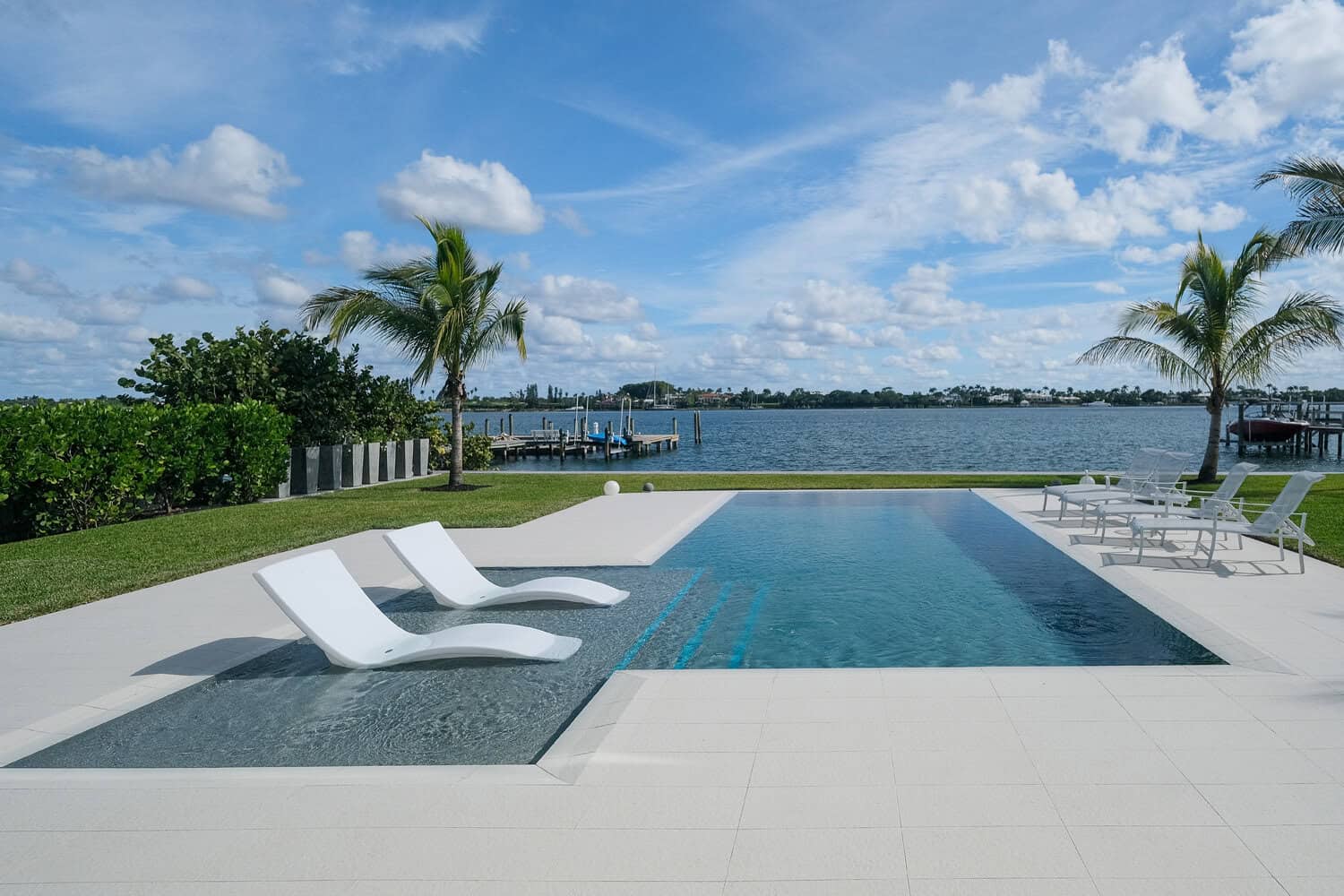
The Art of Invisible Resilience: Engineering the 2026 South Florida Legacy Estate
How climate-first engineering is redefining luxury waterfront homes—where Category 5 performance meets seamless, sophisticated design.
Introduction
There is a distinct energy to the South Florida coastline—a tension between beauty and volatility that defines how exceptional homes must be built. The Atlantic offers panoramic serenity one moment and raw, unfiltered force the next. For decades, luxury construction responded defensively, prioritizing mass and enclosure over openness and experience.
That approach no longer aligns with the expectations of today’s discerning homeowner.
In 2026, the most sophisticated estates are not designed to resist the environment in obvious ways—they are engineered to coexist with it. Expansive glass walls, floating rooflines, and seamless indoor-outdoor transitions are no longer aesthetic risks. They are made possible through a new standard of construction: invisible resilience.
At Watlee Construction, this means integrating advanced structural systems, material science, and coastal engineering into every layer of a home—without disrupting its architectural clarity. The result is a residence that feels effortless, refined, and open, yet performs at the highest level of durability in one of the most demanding coastal environments in the world.
This is not simply building for today. It is building for decades of exposure, elevation, and evolving climate realities—without ever compromising design.
Market / Industry Insight
Across Palm Beach, Broward, Miami-Dade, and Martin County, the definition of luxury has shifted. Buyers are no longer impressed by scale alone. They are evaluating performance—how a home withstands wind, water, salt exposure, and time.
Building within the High-Velocity Hurricane Zone (HVHZ) is a baseline requirement across South Florida’s coastal markets. However, true high-end construction extends well beyond code compliance. HVHZ standards ensure structural survival; they do not guarantee preservation of finishes, systems, or long-term integrity.
This distinction is critical.
In waterfront communities—from Jupiter Island to Fort Lauderdale’s Intracoastal corridors—clients are investing in properties that must endure storm surge, sustained wind loads exceeding 170 mph, and constant salt-air exposure. These are not theoretical risks. They are annual considerations.
As a result, the most advanced builds are engineered with layered protection:
- Elevated foundations designed for future floodplain adjustments
- Structural systems calculated for extreme lateral loads
- Envelope assemblies that mitigate water intrusion at a microscopic level
- Materials selected for long-term resistance to corrosion and UV degradation
What defines the next generation of luxury homes is not visible reinforcement—it is concealed intelligence. Homes are being designed as integrated systems, where architecture and engineering operate in complete alignment.
The market is rewarding this approach. Properties that combine refined design with climate-first engineering are commanding stronger long-term value, reduced maintenance exposure, and greater buyer confidence.
Design & Build Perspective
Executing a residence that feels open and sculptural while performing under extreme conditions requires precision at every stage—from foundation to finish.
Elevated Foundations Without Compromise
Elevation is one of the most critical decisions in coastal construction. FEMA flood maps, base flood elevation (BFE), and future sea-level projections all influence how a home is positioned.
However, elevation must be handled with restraint.
Rather than exposing structural height, we design elevated foundations that are fully integrated into the landscape. Terraced hardscapes, water features, and layered greenery create a natural transition from grade to living level. The home appears grounded and intentional—not elevated as a defensive measure, but as a design choice that enhances views and spatial flow.
Beneath this refined presentation lies a highly engineered system designed to manage hydrostatic pressure and flood dynamics.
Hydrostatic Openings: Letting Water Pass, Not Resist
One of the most misunderstood aspects of coastal construction is how to handle storm surge. Attempting to fully block water at the foundation level creates dangerous pressure buildup that can compromise structural walls.
The solution is counterintuitive: controlled permeability.
Hydrostatic openings are strategically integrated into lower-level enclosures, allowing water to move freely in and out during a flood event. This equalizes pressure and preserves the integrity of the structure above.
In a luxury setting, these systems are never exposed. They are concealed within architectural detailing—custom louvers, integrated cladding, or breakaway wall systems that maintain the visual continuity of the home while performing under extreme conditions.
This is where craftsmanship meets engineering. Every detail must serve both form and function without compromise.
Self-Healing Concrete: Structural Longevity at the Microscopic Level
Concrete remains the backbone of South Florida construction, but traditional formulations are vulnerable over time—particularly in salt-rich environments.
Micro-cracking is inevitable. The question is how the structure responds.
Self-healing concrete introduces a transformative layer of resilience. Infused with specialized compounds that activate upon contact with moisture, this material seals micro-cracks internally before they expand or allow deeper intrusion.
From a builder’s perspective, this dramatically extends the lifespan of structural components. Foundations, columns, and load-bearing elements maintain integrity without the progressive degradation typically associated with coastal exposure.
For the homeowner, this translates to something more meaningful: continuity. The home retains its strength, alignment, and performance long after initial construction.
Salt-Air Resistance: Specifying 316 Stainless Steel
Salt air is one of the most aggressive environmental factors in coastal construction. It affects everything—fasteners, railings, door systems, and even concealed structural connectors.
Standard materials degrade faster than expected, leading to premature wear and costly replacements.
Marine-grade 316 stainless steel is the benchmark for true coastal durability. Its enhanced corrosion resistance makes it essential for both exposed and hidden components.
We specify 316 stainless steel across critical systems:
- Structural connectors and anchoring hardware
- Sliding glass door tracks and rollers
- Exterior railings and architectural elements
- Custom hardware integrated into bespoke features
Paired with advanced coatings and refined finishes, these materials ensure that performance does not detract from visual clarity. Doors glide effortlessly. Fixtures retain their integrity. Details remain sharp and consistent over time.
This is where refined finishes meet long-term performance—without compromise.
Lifestyle & Client Experience
A well-built home is not defined solely by its ability to withstand extreme conditions. It is defined by how it feels to live within it every day.
Invisible resilience enhances the living experience in ways that are subtle yet profound.
Expansive glass walls, engineered to meet HVHZ standards, allow uninterrupted views of the ocean while maintaining thermal efficiency and impact resistance. Natural light floods interior spaces without exposing the home to heat gain or UV damage.
Open-plan layouts flow seamlessly into outdoor living areas—covered lanais, pool terraces, and waterfront lounges—without concern for structural vulnerability. These transitions are carefully detailed to maintain continuity while protecting the building envelope.
Climate-first engineering also improves comfort:
- Reduced air infiltration enhances interior climate control
- Advanced insulation and glazing systems stabilize temperature
- Structural integrity minimizes vibration and noise during high winds
The result is a home that feels calm, controlled, and refined—even in unpredictable conditions.
For the client, the experience is not defined by what they see, but by what they never have to think about. Doors operate smoothly. Materials age gracefully. Systems perform quietly and reliably.
This is elevated living—not just in design, but in daily experience.
Investment & Long-Term Value
In high-value coastal markets, construction decisions directly impact long-term asset performance.
Homes built to minimum standards may meet code, but they often require ongoing maintenance, retrofitting, and repair—particularly after severe weather events. Over time, these costs compound.
By contrast, a residence engineered with invisible resilience is positioned for durability from day one.
Key advantages include:
- Extended structural lifespan through advanced materials like self-healing concrete
- Reduced maintenance exposure due to corrosion-resistant components
- Enhanced insurability with higher-performance building systems
- Stronger resale positioning in a market increasingly focused on climate resilience
Buyers at the highest level are asking more informed questions. They are evaluating not just design, but construction methodology, material specifications, and long-term performance.
A home that integrates these elements seamlessly holds its value differently. It is not simply a residence—it is a legacy asset.
In markets like Palm Beach and Miami Beach, where waterfront properties command premium pricing, this distinction becomes even more critical. The difference between a well-built home and a truly engineered estate is measurable over time.
Conclusion
Luxury in South Florida has evolved beyond aesthetics. It is no longer defined solely by scale, location, or finishes—it is defined by how intelligently a home is built to endure its environment.
Invisible resilience represents a new standard. It is the integration of advanced engineering, material innovation, and refined design into a single, cohesive vision. It allows a home to remain open, light-filled, and architecturally expressive while performing at the highest level under extreme conditions.
At Watlee Construction, this approach is fundamental. Every decision—from foundation design to material selection—is guided by the understanding that true luxury is not just what you see, but what protects and sustains the home over time.
The goal is not to build a structure that simply survives. It is to create a residence that endures—quietly, confidently, and without compromise.
Because in the end, the most sophisticated homes are not those that appear strongest.
They are the ones where strength is never visible at all.